Thank goodness for libraries. We should appreciate them on so many different levels.

As Vicki and I get back to actual travel, we start with Dixon, Missouri, and an attempt to find confirmation that my grandmother was born near there in 1873.
I barely knew my mother’s mother, Julia Alice Smith Morris. Granny was much more engaged with my older sister, taking care of her and telling her cool stories. The stories had faded by the time I came along, as had her vision.
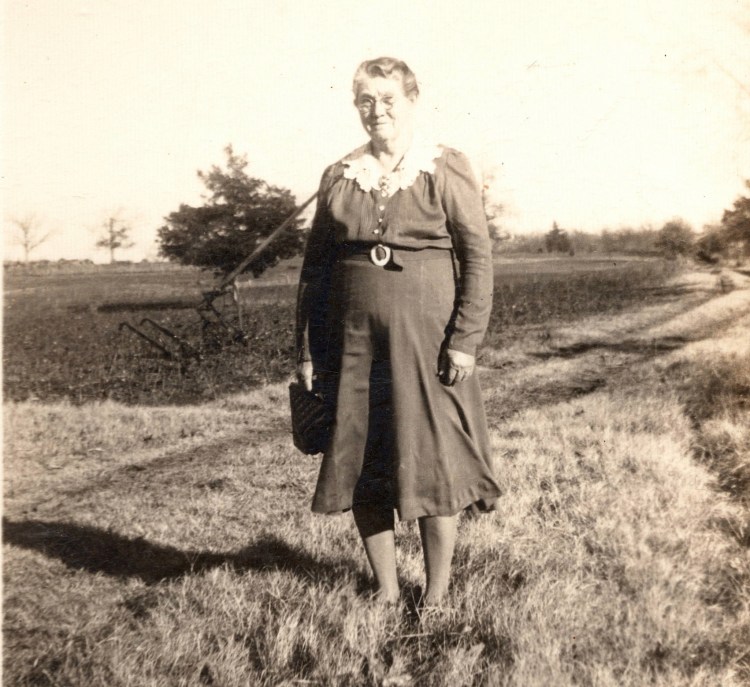
But Granny’s origin story had become a bit of a mystery. According to my mother, Granny always said she was born in Hempstead County, Missouri. Unfortunately, there is no Hempstead County in Missouri and apparently never has been. There was one document, a Social Security application filled out in the 1960s, that listed the town of Dixon.
I started, of course, with the library in Dixon. How could I not? I love libraries; always have. My first memory of a non-school library was in the basement of the Johnson County Courthouse in Clarksville. The book I remember was “Misty of Chincoteague,” by Marguerite Henry. Or perhaps it wasn’t. Other books about horses and islands are available, I’m sure.
And when the new library was built close to the levee in Clarksville, it was heaven. Books everywhere, not just lining a hallway! (That’s how I remember it, at least.)
So it was a delight to visit the library in Dixon. I wore my t-shirt that says “I’m with the banned,” meaning banned books. She said she has the same shirt in a different color, and we both have found it’s a nice conversation starter.
The librarian was kind enough to fill me in on the town and the railroad and the river. Dixon was a boom town when the railroad came in. A train might have brought my ancestors there, although my own vision has them traveling by wagon.
There were no birth records, although the longtime doctor who served the area kept good records that are now in a relative’s possession, that doctor didn’t start practice until the early 1900s, according to the librarian.
Granny was born in April 1873.
While the librarian was a wealth of information about the town, the library had little in the way of written information.
Strike one.
I next turned to the public records at the county clerk’s office in Waynesville. A staffer helped me log in to check the index, but neither she nor I had much hope, considering how the original courthouse burned in 1903, sending all that data up in smoke.
Strike two.
I was driving back to the campsite when I went by the Waynesville Library.
Hmm. Larger town. County seat. Of course.
I turned around and tried there.
Sure enough, the librarian directed me to the genealogy room and then suggested a few starting points.
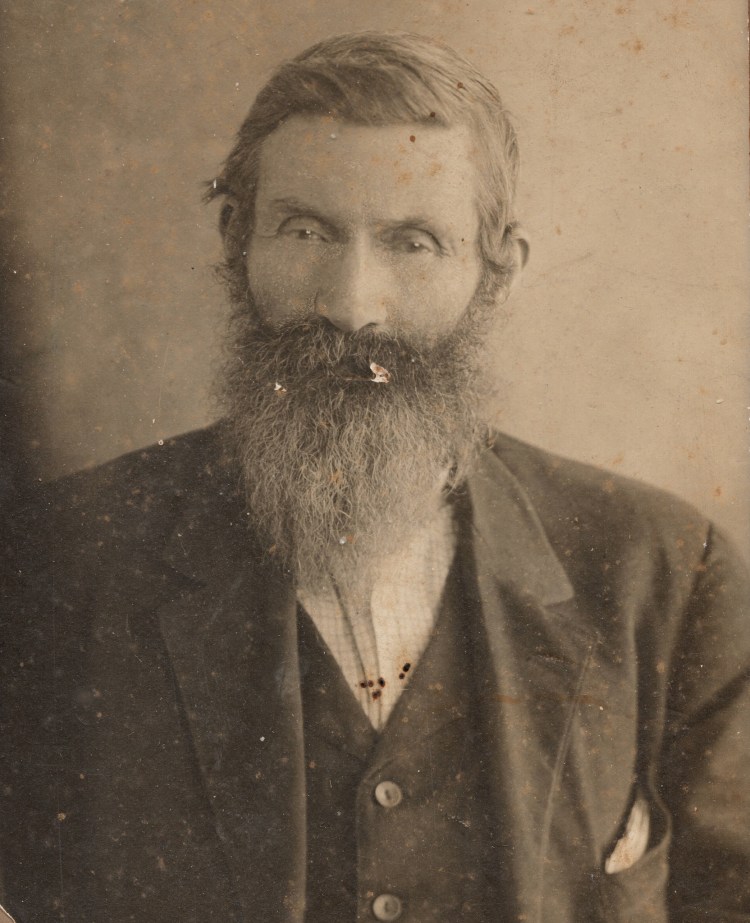
And there, in a list of federal land sales, was Granny’s father, Giles Smith, who on Sept. 26, 1877, purchased 80 acres of land in Section 21, Township 38, Range 10 West. That legal description was enough to get me to the very northeast tip of Pulaski County.
That area today, as shown by Google maps, is out at the end of a county road, near the start of Duncan Creek. It’s hilly and mostly wooded now, but there is a large area on the top of a hill that looks like pasture. Somewhere in there is the 80 acres where my ancestors lived and farmed.


More questions remain. The 1880 census shows Giles Smith and his family in Arkansas. Why did they leave so soon after buying the land? The description is for 80 acres in a one-square-mile section of 640 acres. So where was their exact home? The latter question can be resolved with a search of those federal land sales, perhaps. Or a trip to the state land commissioner’s office might turn up the original survey of that area.
The former question is probably lost to time, like much of family history.
And the little museum in Waynesville is only open on Saturdays, and we have already scheduled travel for today.
Perhaps next trip through the area.
 Two Sheeps to the Wind
Ah, the never-ending search for our roots. It’s fascinating, and I love it. Good for you.
LikeLike
Loved reading about your search! Looking forward to the next post! Are you enjoying your new camper!
LikeLike
You bet!
LikeLike